A Guide to Getting the Proportions Right
Loafers and jeans should be one of the easiest combinations in a fall wardrobe.
Both are classics. Both are incredibly versatile. And together, they can create that effortless, polished look that works for everything from running errands to lunch or a casual day at the office.
But sometimes you put on a beautiful pair of jeans, add loafers—and something suddenly feels off.
The outfit looks heavier than expected. The shoes seem disconnected from the jeans. Or a combination that looked sophisticated on someone else somehow doesn’t create the same effect in your own outfit.
Usually, the problem isn’t that loafers don’t work with your jeans.
It’s the relationship between the jean hem and the shoe.
Toe shape, vamp, sole thickness, jean length, leg opening and even the amount of ankle showing can completely change the proportions of the outfit.
Once you know what to look for, choosing the right loafer becomes much easier.
Watch: How to Wear Loafers With Jeans Without Looking Frumpy
1. Not All Loafers Create the Same Look
One of the biggest mistakes we make when styling shoes is treating every shoe within a category as though it creates the same effect.
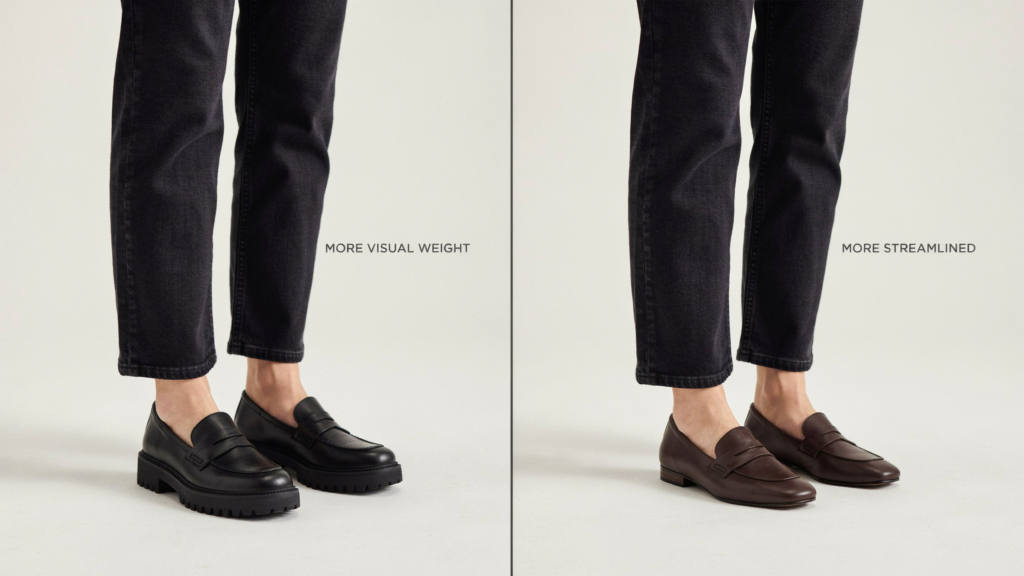
A streamlined leather loafer with a slim sole and softly tapered almond toe creates a very different line from a chunky loafer with a broad toe and thick lug sole.
Neither is inherently better.
They simply carry different amounts of visual weight.
A refined loafer tends to disappear more easily into an outfit. A substantial loafer becomes a stronger visual anchor.
That distinction becomes especially important when you’re wearing jeans.
2. Pay Attention to Toe Shape
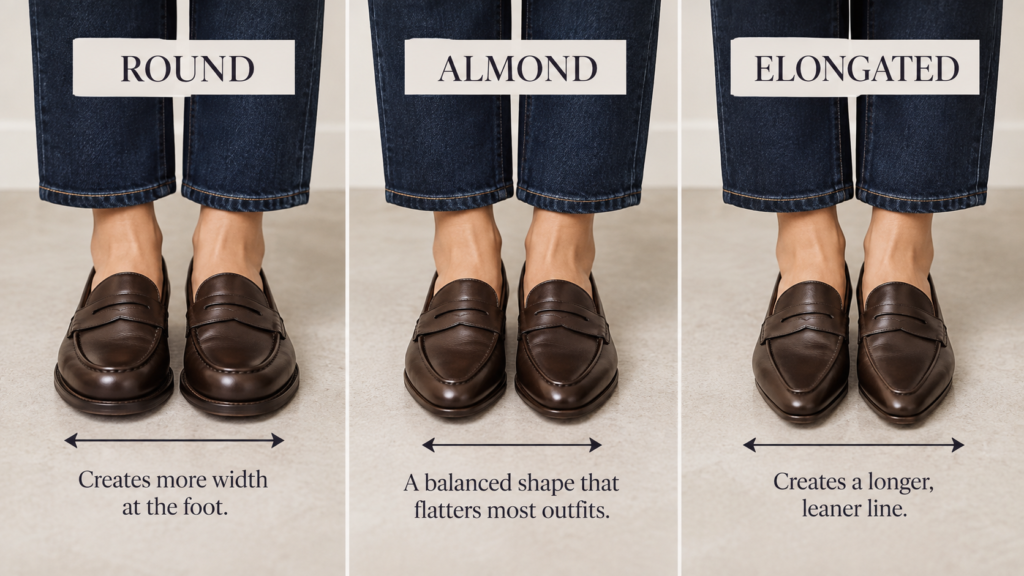
Toe shape changes the direction your eye travels through the outfit.
A broad rounded toe creates more width at the bottom.
An almond toe narrows slightly toward the front while maintaining softness.
A more elongated or pointed shape pulls the eye forward and creates the longest visual line.
That doesn’t mean round-toe loafers are “frumpy.” It simply means they create a different proportion.
If an outfit feels heavier than expected, look at the shoe from above. The width and length of the toe may be contributing more to the overall silhouette than you realized.
3. The Vamp Matters Too
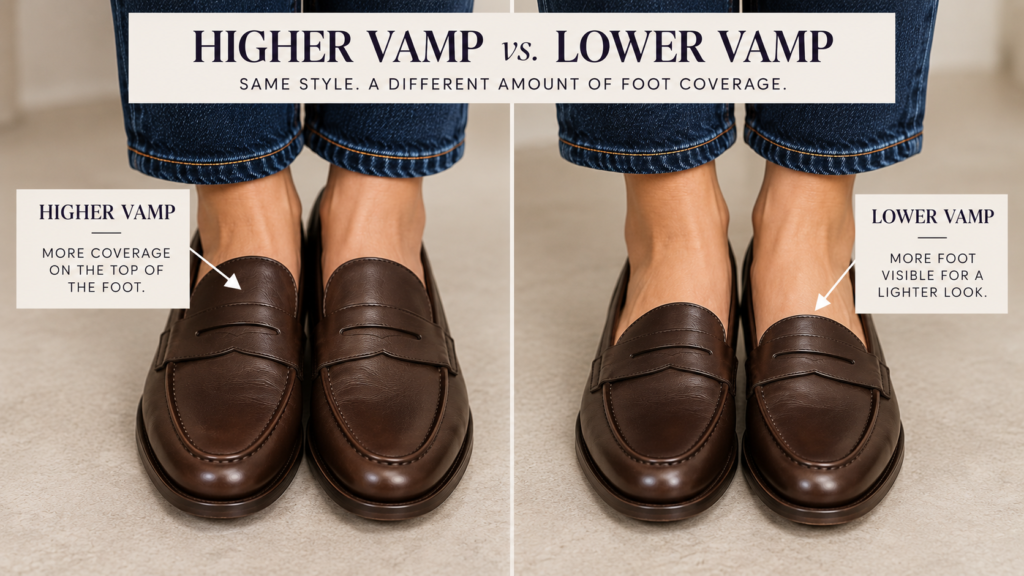
The vamp is the upper portion of the shoe that covers the top of your foot.
Some loafers come relatively high up the foot. Others expose more of the upper foot.
Why does that matter?
Because a higher vamp creates more visual coverage.
Combine a high vamp with a broad toe and thick sole, and suddenly there is quite a bit of shoe underneath a relatively narrow jean opening.
A lower or more streamlined vamp exposes more of the foot and can create a lighter transition between the jeans and shoe.
This is one of those small design details that’s easy to overlook until you start comparing shoes side by side.
4. Think About Visual Weight
Now put the details together.
A loafer with a:
- broad rounded toe
- high vamp
- thick lug sole
- substantial heel
carries considerably more visual weight than a streamlined leather loafer.
Put that substantial shoe underneath a very narrow straight-leg jean and the shoe may suddenly appear wider and heavier than the denim column above it.
Swap only the shoe for a sleeker loafer and the entire outfit can look different—even though the jeans haven’t changed.
A useful question to ask is:
Is the shoe carrying more visual weight than the jean can support?
5. Jean Length Changes Everything
This may be the most important part of the equation.
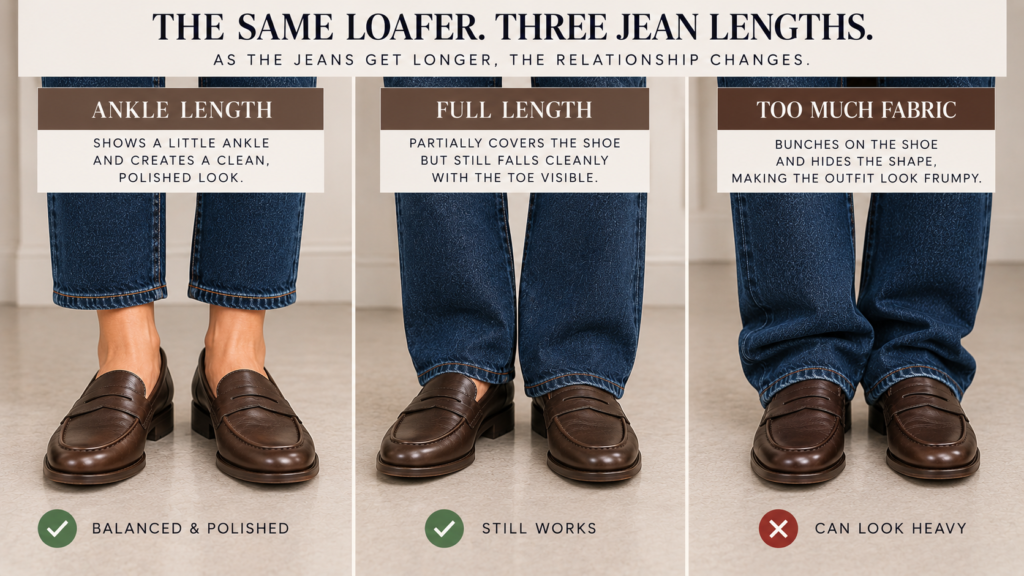
With ankle-length straight jeans, a small amount of exposed ankle creates breathing room between the denim and loafer.
As the jeans become longer, the relationship changes.
A full-length jean may partially cover the loafer, leaving mostly the toe visible. That can look beautiful, especially with a streamlined shoe.
But when excess denim collapses or bunches heavily onto the loafer, the bottom of the outfit can begin to feel visually crowded.
Instead of asking only:
“Are these jeans too long?”
Ask:
“Where does this jean end in relation to this shoe?”
6. Cropped Jeans Need a Little More Attention
Not all cropped jeans expose the same amount of leg.
A jean ending just above the ankle creates a very different proportion from one ending several inches higher.
The more lower leg you expose, the more visually separate the shoe becomes from the denim.
That separation becomes particularly noticeable with a very dark or chunky loafer.
A lighter or more streamlined loafer can create a softer transition, while a substantial black loafer creates a much stronger anchor.
Again, neither is automatically wrong.
The question is whether that strong contrast is the finish you intended.
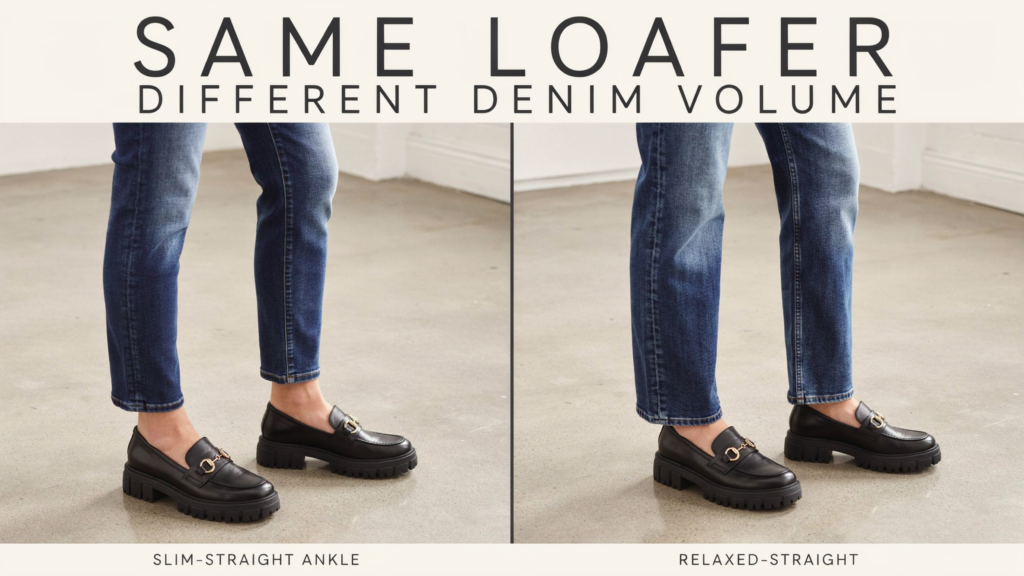
7. Match the Loafer’s Weight to the Leg Opening
Straight-leg jeans aren’t all the same either.
A slim straight jean creates a relatively narrow column.
A classic straight gives you a little more room.
A relaxed straight provides noticeably more denim volume.
That additional fabric can support a heavier shoe.
This is why a chunky lug-sole loafer that seems disproportionately heavy underneath a slim ankle jean can suddenly look completely intentional underneath a relaxed straight jean.
The loafer didn’t change.
The amount of denim above it did.
8. Don’t Forget About Socks
Fall introduces another element into the outfit: socks.
Imagine medium-wash jeans, a cream sock and a black loafer.
Your eye sees three distinct sections:
Jean. Sock. Shoe.
That high contrast can be intentional and stylish.
But if you want a quieter transition, try a charcoal or black sock with the black loafer. Now the sock and shoe visually connect, reducing the number of strong breaks.
Before choosing socks, decide whether you want them to become part of the outfit—or quietly support it.
9. Loafer Color Changes the Transition
Color matters for the same reason.
Black loafers underneath medium-blue denim create relatively strong contrast.
Cognac or taupe creates a softer transition.
Dark indigo jeans paired with deep chocolate or black loafers can create an especially sophisticated fall combination because the values are closer together.
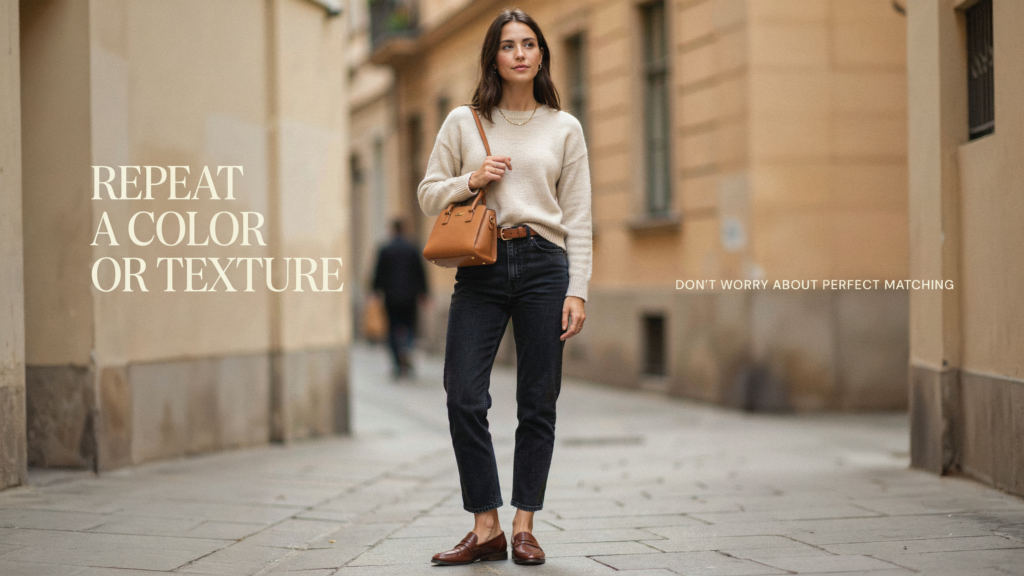
This is also why repeating the leather color somewhere else in the outfit can work so beautifully.
A chocolate loafer doesn’t require an identical chocolate belt or handbag.
Simply repeating a similar color or texture gives the outfit a sense of cohesion.
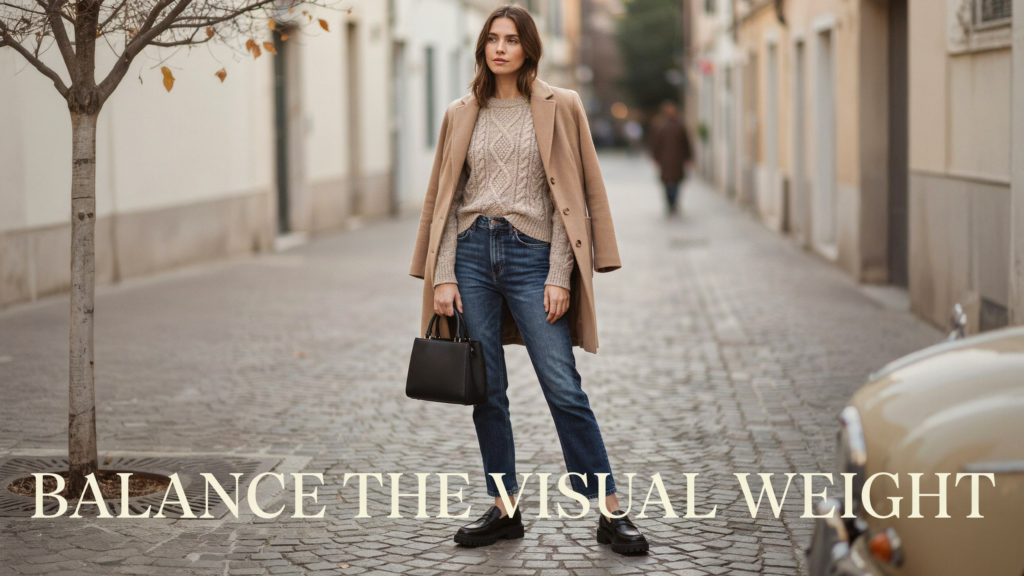
10. Yes, You Can Wear Chunky Loafers With Jeans
Chunky loafers aren’t the enemy.
They simply need enough visual support.
If you’re wearing a substantial lug-sole loafer, try pairing it with:
- a slightly more relaxed jean
- a longer denim length
- a substantial knit
- a structured blazer or jacket
- a structured handbag
Those elements create another visual anchor so all of the weight isn’t concentrated at your feet.
This is an important distinction because the goal isn’t to create more arbitrary fashion rules.
It’s to understand proportion.
3 Polished Loafer + Jeans Outfit Formulas
Once you understand those relationships, putting together an outfit becomes much easier.
Formula 1: Refined + Tonal
Dark-indigo ankle-length straight jeans + ivory fine-gauge sweater + slim chocolate belt + refined chocolate almond-toe loafers + structured chocolate handbag.
The small amount of ankle exposure keeps the shoe visible, while repeating the chocolate leather creates cohesion.
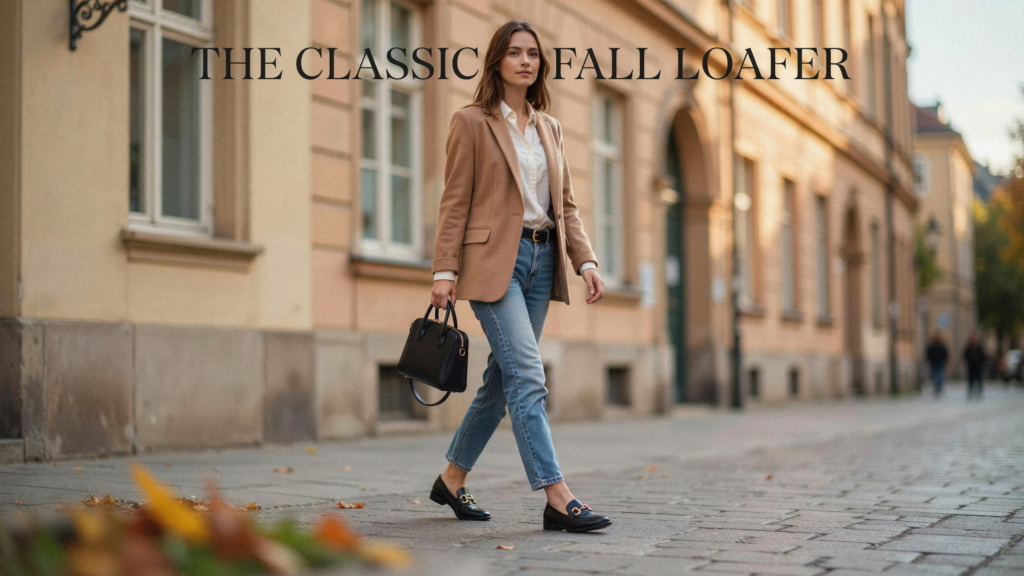
Formula 2: Classic + Structured
Medium-wash straight jeans + crisp ivory button-down + tailored camel blazer + slim black belt + sleek black loafers + structured black handbag.
The blazer adds structure above while the repeated black accessories anchor the outfit.
Formula 3: Chunky + Balanced
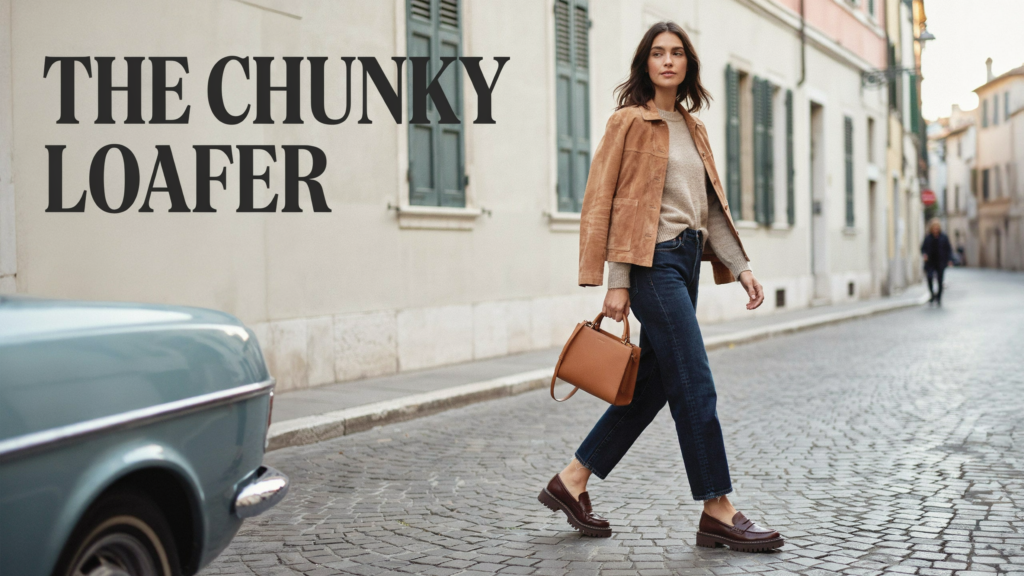
Relaxed straight-leg dark denim + oatmeal knit + structured camel or taupe suede jacket + substantial dark lug-sole loafers + structured handbag.
The relaxed denim and outer layer give the heavier shoe enough visual support.
Shop the Loafer + Jeans Edit

The 5-Point Loafer Check
The next time loafers don’t seem quite right with your jeans, don’t immediately assume you need different jeans—or that loafers simply don’t work for you.
Check these five things:
1. Toe shape — Is it broad, almond or elongated?
2. Visual weight — How substantial are the vamp, sole and heel?
3. Jean length — Where does the hem meet the shoe?
4. Leg opening — Does the denim have enough volume to balance the shoe?
5. Contrast — How strong is the transition between the denim, ankle or sock, and loafer?
And if socks are visible, consider them part of the equation too.
The Bottom Line
Loafers aren’t inherently polished, and they aren’t inherently frumpy.
There also isn’t one “correct” loafer to wear with jeans.
The goal is to learn how to see the relationship between toe shape, vamp, visual weight, jean hem, leg opening and the rest of the outfit.
Once you understand those relationships, you don’t need nearly as many fashion rules.
You can look at an outfit, recognize why something feels off, and know exactly what you can change to bring it back into balance.
Want to see these comparisons in action? Watch the full video: How to Wear Loafers With Jeans Without Looking Frumpy on Get Trendy With Wendy.
Coming Next
The Jeans Mistakes That Throw Off Your Entire Outfit
We’ll look beyond the shoes and examine how fit, proportions and denim details can affect everything you wear with your jeans.